
What is NanoVNA-F V3?
The NanoVNA-F V3 is a portable, dual-port vector network analyzer (VNA) covering 1 MHz to 6 GHz. It measures how RF signals reflect from and transmit through electrical components — antennas, filters, cables, amplifiers, and anything else with an RF connector.
If you have ever needed to verify that an antenna is resonant on frequency, check the passband of a filter, or find a fault in a coaxial cable, this is the instrument for the job.
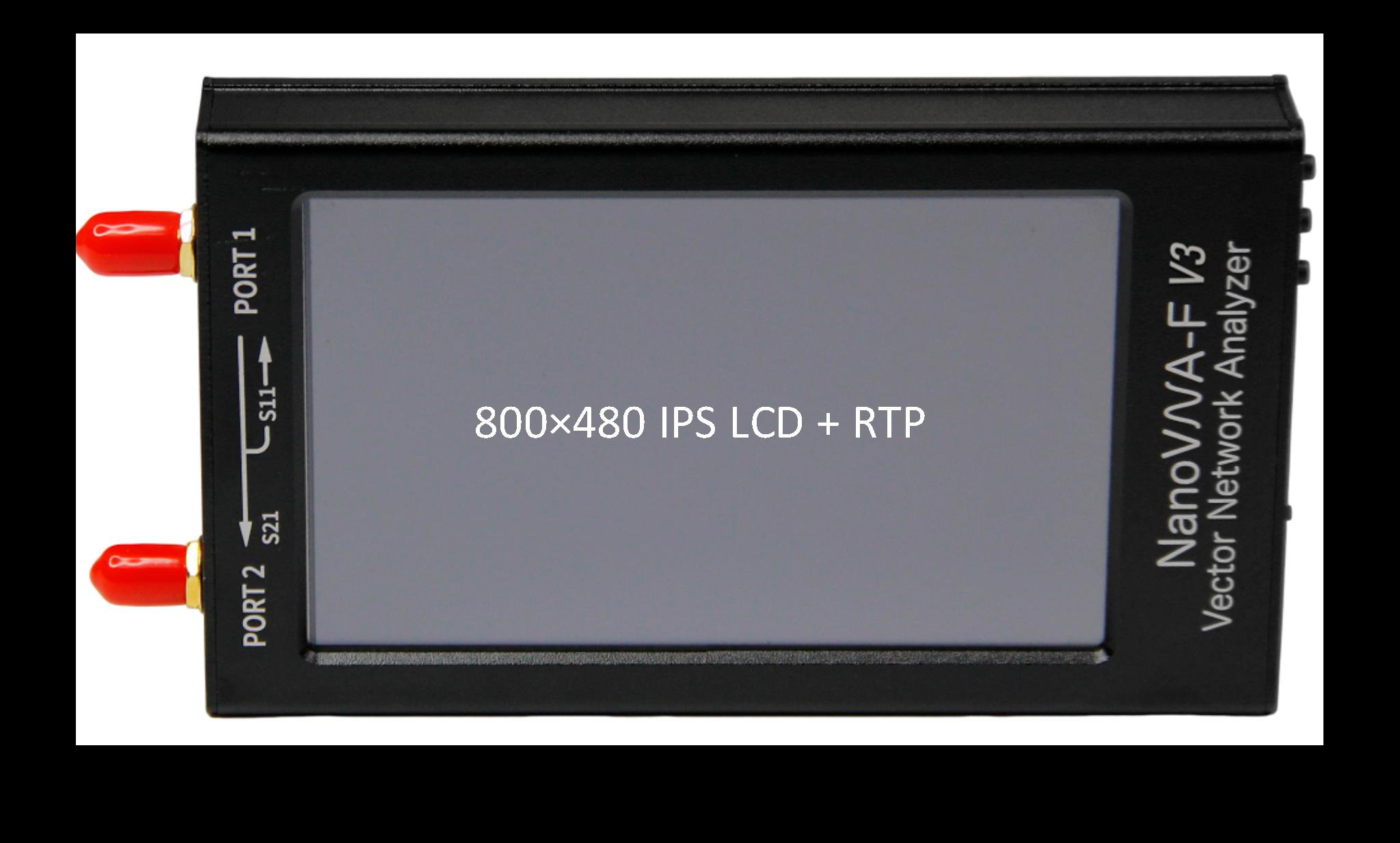
At a glance
Section titled “At a glance”Key features
Section titled “Key features”Broad frequency coverage. The 1 MHz — 6 GHz range spans MF through SHF, covering HF, VHF, UHF, and the lower microwave bands. That means one device handles everything from 160-meter dipoles to 5 GHz Wi-Fi antennas.
Dual-port measurement. PORT1 measures reflected signals (S11) and PORT2 measures transmitted signals (S21). Swap the DUT connections to get S22 and S12 when needed.
Solid dynamic range. S21 dynamic range reaches 65 dB below 3 GHz and 60 dB above it. S11 dynamic range is 50 dB below 3 GHz and 40 dB above. These figures are more than adequate for most amateur radio and general RF bench work.
Metal construction. The aluminum alloy case provides shielding and durability. SMA connectors give reliable, repeatable connections across the full frequency range.
Readable display. The 4.3-inch IPS panel (800 x 480) shows up to four simultaneous traces with enough resolution to actually read the data. A resistive touch panel and three physical buttons handle navigation.
All-day battery. The 4500 mAh battery delivers roughly five hours of continuous use. Charging is via USB Type-C (4.7 — 5.5 V). A USB-A port on the side provides 5 V / 1 A power output for accessories.
Advanced features. Up to 801 configurable sweep points, TDR mode for cable fault location, four markers with search functions, and 12 calibration save slots.
What’s in the box
Section titled “What’s in the box”- NanoVNA-F V3 device
- SMA calibration kit (Open, Short, Load standards)
- 2x 20 cm SMA-JJ RG405 semi-rigid cables
- USB Type-C data/charging cable
Ports and connectors
Section titled “Ports and connectors”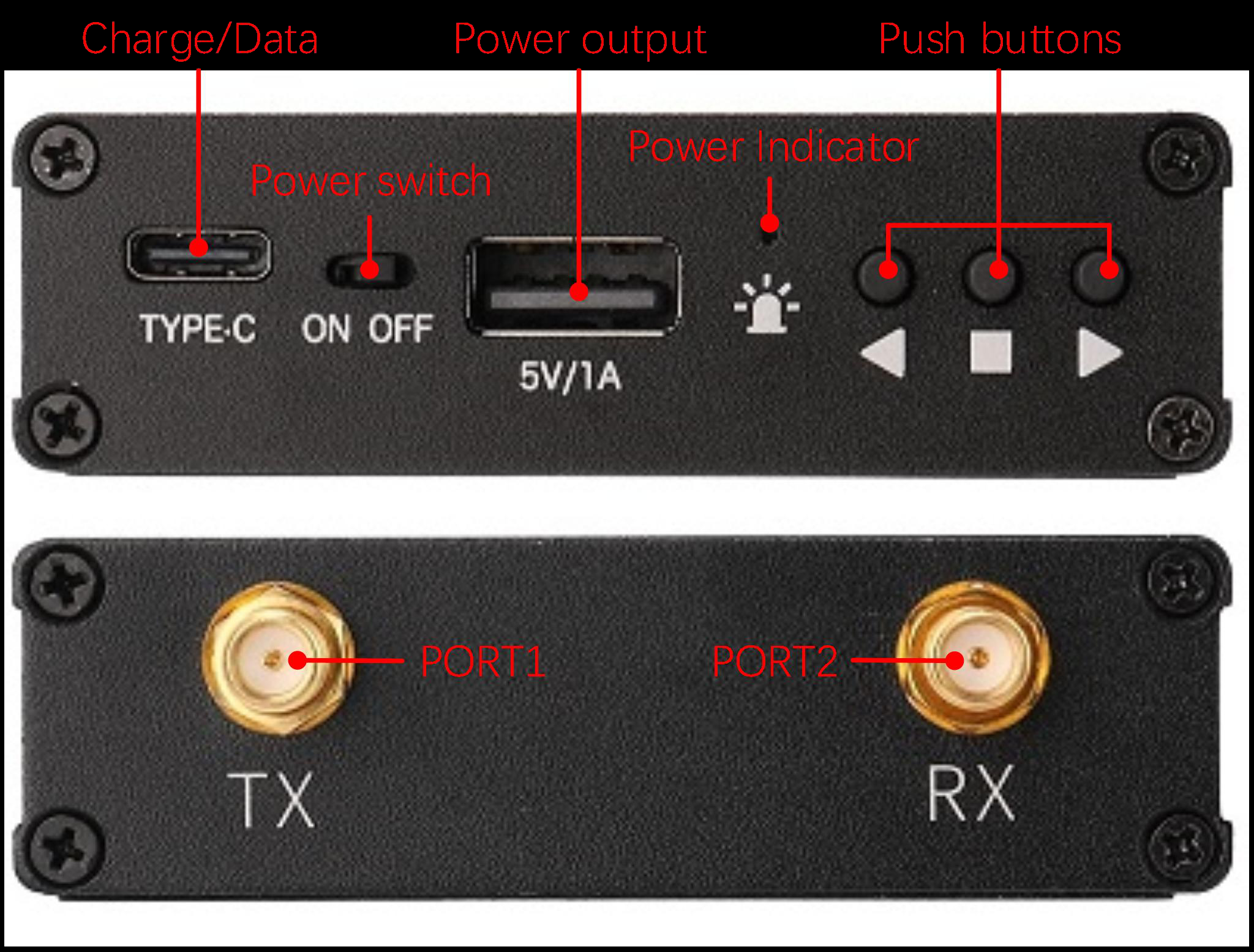
| Port | Purpose |
|---|---|
| PORT1 (SMA) | Stimulus output and S11 reflection measurement |
| PORT2 (SMA) | S21 transmission measurement |
| USB Type-C | Charging, PC data connection, firmware upgrade |
| USB-A | 5 V / 1 A power output for accessories |
Who is this for?
Section titled “Who is this for?”The NanoVNA-F V3 fits into several workflows:
- Ham radio operators tuning and verifying antennas across HF, VHF, and UHF bands
- RF engineers and technicians doing bench work on filters, amplifiers, and matching networks
- Electronics hobbyists learning about RF, impedance matching, and transmission line theory
- Field service technicians who need a portable instrument for cable testing and site surveys
Typical use cases
Section titled “Typical use cases”Antenna work. Measure SWR, return loss, and impedance across the operating band. Adjust antenna length, matching, and feed arrangements while watching the results in real time.
Filter characterization. Measure insertion loss, passband shape, and rejection across frequency. Verify filter performance against specifications or tune homebrew designs.
Cable testing. Check cable loss, locate faults with TDR mode, and verify connector integrity. Measure cable length using velocity factor and time-domain analysis.
Amplifier and attenuator testing. Measure gain or loss (S21) and input/output match (S11, S22) across the operating frequency range.
Component matching. Use the Smith chart to visualize impedance and design matching networks for power amplifier inputs, antenna feeds, and other impedance-critical circuits.
Ready to get started? Head to the Quick Start Guide to power on and take your first measurement.